
How to Bet on UFC: The Complete UK Guide to MMA Betting
 Available in US
The Five Numbers and Skills That Define Profitable UFC Betting
- UFC betting handle hit .3 billion in 2024, growing at 18%+ CAGR — this market is expanding faster than almost any other sport, and UK punters have full legal access through UKGC-licensed operators.
- Favourites win 72% of UFC bouts, but underdogs at +200 or longer upset at 39%, well above the 28% historical average — blind favourite backing is a losing strategy.
- Weight class matters more than most bettors realise: heavyweight sees nearly 50% KO/TKO finishes, while women's bantamweight goes past 1.5 rounds 96% of the time.
- Value betting — comparing your assessed probability against the implied odds — is the only sustainable edge. Track closing-line value quarterly to measure your process.
- Size every bet at 1-3% of a dedicated bankroll, use the mandatory deposit limits UKGC operators now offer, and pass on fights where your analysis lacks conviction.
Why UFC Betting Is One of the Fastest-Growing Markets in UK Sports
I placed my first UFC wager in 2017 on a whim — a mate dragged me to a pub screening of a Fight Night card, I threw a fiver on the underdog, and watched him land a head kick that changed the course of my Saturday and, eventually, my career. Nine years later, I have tracked thousands of bouts, built my own pre-fight models, and turned what started as a pub bet into a full-time analytical discipline. This guide distils everything I have learned into one resource built specifically for UK punters.
The growth numbers back up what I have seen firsthand. MMA betting handle reached .3 billion in 2024 — a 17% jump year on year — and the gross gaming revenue from UFC wagering alone has grown at a compound annual rate exceeding 18% over the past five years, outpacing almost every other major sport. That is not a blip; it is a structural shift in how punters engage with combat sports. UFC now attracts roughly 700 million fans worldwide and more than 330 million social media followers, and the betting markets have expanded to match that audience.
For UK bettors, the landscape is particularly well-suited. The UK Gambling Commission licenses every operator that accepts your wager, deposit limits became mandatory from October 2025, and fractional odds remain the default display for most British sportsbooks. You are not navigating a regulatory grey area — you are operating in one of the most tightly governed betting environments on the planet. That combination of rapid market growth and strong consumer protection is exactly why I believe UFC betting deserves a serious, data-driven guide tailored to this GEO.
UFC Market Snapshot
Global MMA betting handle in 2024: .3 billion. UFC betting GGR growth rate: 18%+ CAGR over five years. UFC global fan base: approximately 700 million. UK total gambling GGY: £16.8 billion (year to March 2025). UFC hosts 43+ live events annually across 210+ countries.
This guide covers every stage of the process: reading odds in the formats you actually see on UK sites, understanding which bet types suit your risk appetite, analysing fighters with the same tools I use in my own workflow, building a staking plan that survives variance, and staying on the right side of the law. Each section is an overview — a launchpad that gives you the essential knowledge and then points you toward deeper resources where the real detail lives. Whether you are placing your first UFC wager this weekend or refining a process you have been running for years, the framework here will sharpen your edge.
UFC Odds Explained: Fractional, Decimal, and American Formats
The first time I tried to compare UFC lines across three different bookmakers, I stared at three completely different numbers for the same fighter and genuinely wondered whether they were pricing the same bout. Fractional, decimal, and American odds all express identical information — the implied chance of an outcome and the potential return on your stake — but they do it in ways that can look like separate languages. Once you crack the code, every line you see tells the same story.
Fractional odds are what most UK sportsbooks display by default. They show you the profit relative to your stake. If a fighter is listed at 3/1, a winning £10 bet returns £30 profit plus your original £10 back. The number on the left is profit, the number on the right is the stake required to earn that profit. A favourite might appear at 2/5, meaning you need to stake £5 to earn £2 profit. The key insight is that any fraction where the left number is smaller than the right signals a favourite, and any fraction where the left exceeds the right signals an underdog. For a full breakdown of every format and how to convert between them, I have written a dedicated guide to UFC betting odds in fractional, decimal, and American formats.
Decimal odds are simpler in one respect: they show you the total return including your stake in a single number. A fighter priced at 4.00 in decimal format pays £40 on a £10 bet (£30 profit plus the £10 stake). To convert fractional to decimal, divide the fraction and add one — so 3/1 becomes 3.0 + 1.0 = 4.00. Anything above 2.00 is an underdog; anything below 2.00 is a favourite. Most European-facing sportsbooks and betting exchanges default to decimals, and many UK punters switch to this format because it makes comparing returns across bookmakers faster.
Same Fighter, Three Formats
Suppose a fighter is priced at 5/2 fractional. In decimal, that is 3.50. In American, that is +250. All three mean the same thing: a £10 stake returns £35 total (£25 profit). The implied probability is roughly 28.6%.
American odds are the format you encounter on US-centric sites and podcasts. Positive numbers (e.g., +250) show the profit on a 0 stake; negative numbers (e.g., -180) show the stake needed to earn 0 profit. You will see these frequently in UFC coverage because the sport's media ecosystem is heavily American, but UK bookmakers rarely display them. Knowing how to read American lines matters when you are consuming pre-fight analysis from US sources and need to translate that information into the odds you see at home.
| Format | Favourite Example | Underdog Example | Default Display Region |
|---|---|---|---|
| Fractional | 2/5 | 3/1 | United Kingdom |
| Decimal | 1.40 | 4.00 | Europe, Australia |
| American | -250 | +300 | United States |
The practical skill that separates casual punters from serious ones is converting odds into implied probability. If a fighter is priced at 1/3 fractional (1.33 decimal), the bookmaker's implied probability is 75%. That does not mean the fighter has a 75% chance of winning — it means the market, including the bookmaker's margin, is pricing the outcome as if there were a 75% chance. Favourites won 72% of UFC bouts in 2024, so the market's pricing is broadly accurate, but the margin — typically 4-8% across all outcomes in a fight — is where the bookmaker's profit comes from and where your edge needs to live.
Implied Probability Calculation
Fractional odds of 3/1: Implied probability = 1 / (3 + 1) = 0.25 = 25%.
Decimal odds of 1.80: Implied probability = 1 / 1.80 = 0.556 = 55.6%.
If the combined implied probabilities of both fighters exceed 100%, the excess is the bookmaker's overround (margin).

Types of UFC Bets: From Moneyline to Prop Markets
When I first started betting on UFC, moneyline was all I knew — pick the winner, collect or lose. It took about six months of watching markets before I realised that a single fight card can offer upwards of 30 distinct wagering opportunities per bout, and that some of those markets are significantly less efficient than the headline moneyline. Here is an overview of every major bet type available to UK punters, with enough context to decide which ones suit your knowledge and risk tolerance. For a full deep-dive into each market, I have put together a comprehensive breakdown of every UFC bet type with examples and strategy notes.
Moneyline — the simplest UFC bet. You pick the fighter you believe will win the bout by any method. If your fighter wins by knockout, submission, or decision, you collect. If they lose or the bout is declared a draw, you lose your stake.
Moneyline is where the majority of money flows. A heavy favourite at 1/5 (1.20 decimal) requires a £5 stake to profit £1; an underdog at 4/1 (5.00 decimal) returns £4 profit per £1 risked. The simplicity is attractive, but moneyline favourites carry a hidden cost: when a 1/5 favourite loses, you need five consecutive wins at those odds just to recover one loss. That mathematical reality is why experienced bettors diversify.
Method of victory bets ask you to predict not just who wins but how: KO/TKO, submission, or decision. This market rewards deeper knowledge of fighting styles — a grappler facing a striker in a three-round fight presents a very different method profile than two counter-strikers in a five-round championship bout.
Round betting narrows the prediction to the specific round a fight ends, or a round group (rounds 1-2, rounds 3-4). The payouts are higher because the probability is lower. Round group betting is a popular compromise — enhanced odds without needing to pinpoint the exact stoppage round.
Over/under total rounds is a market I use constantly. The bookmaker sets a line — typically 1.5 or 2.5 rounds for a three-round fight, or 2.5 or 3.5 for a five-rounder — and you bet on whether the fight will last longer or shorter than that threshold. This bet strips away the question of who wins and focuses entirely on fight duration, which makes it ideal when two fighters are closely matched on paper but have very different pace profiles.
Prop Bets and Exotic Markets
Proposition bets — commonly called props — cover almost anything measurable within a fight: total significant strikes landed, whether a knockdown will occur, whether the fight will go to a decision, or even whether a specific fighter will attempt a takedown. These markets tend to appear for main card and headline bouts. Availability varies by bookmaker.
Parlays, known as accumulators in UK terminology, combine multiple selections into a single wager. Every leg must win for the bet to pay out. The appeal is obvious — combining three 1/2 favourites into an acca turns those modest individual returns into a larger combined payout. The risk is equally obvious: one loss wipes the entire stake. Parlays amplify variance dramatically, and they are the single most profitable market for bookmakers. I treat them as occasional high-conviction plays, never as a core strategy.
Futures bets allow you to wager on outcomes that will not be settled for weeks or months — typically which fighter will hold a specific divisional championship by a certain date. These markets are relatively thin, meaning the prices can be less efficient than fight-night markets. The trade-off is that your capital is locked up for the duration, and events like injuries or cancelled bouts can derail a position you cannot exit. Point spread betting, borrowed from team sports, is a newer and less common UFC market that applies only to fights going to decision — a niche offering for now, but one that is growing.

How to Analyse a UFC Fighter Before You Bet
A mate once asked me why I spent two hours on a Tuesday night reading grappling exchange statistics for a prelim fight nobody was watching. The answer is simple: that prelim fighter was a -350 favourite with a 40% takedown defence rate facing a wrestler who had completed 5.2 takedowns per fifteen minutes across his last four bouts. The line made no sense once you looked beyond the win-loss record, and the underdog won by decision. That two-hour investment paid for itself many times over — and it illustrates why fight-by-fight research is the single most valuable habit you can develop as a UFC bettor.
The starting point for most people is the win-loss record, and the starting point for most mistakes is treating that record as the whole story. A fighter sitting at 12-2 looks dominant on paper, but context changes everything. Were those 12 wins against top-15 competition or regional circuit opponents? Were the two losses recent, suggesting a decline, or early in a career before the fighter matured? The frequency of competition matters too — fighters compete only two to four times per year, which means even a veteran with twenty UFC bouts has a sample size that would make any statistician nervous. You need to investigate the quality of opposition, the recency of results, and the trajectory of performance, not just the headline numbers.
Style matchups are where the real edge lives. MMA is not one sport — it is a collision of disciplines. A fighter with 85% of their wins coming by knockout is a very different proposition when facing an elite wrestler who averages 4.0 takedowns per fifteen minutes versus a fellow striker who keeps the fight standing. The overall finish rate in UFC sits at roughly 53%, but that number is an average across wildly different stylistic encounters. I always map each fighter's primary offensive and defensive tools before checking a single price. For a deeper framework on how to systematically evaluate matchups, take a look at my guide on UFC fighter analysis for betting.
Sample sizes in UFC statistics are inherently small. A fighter competing three times a year accumulates fifteen to twenty data points across a five-to-seven-year career. Treat every stat as directional, not definitive — and weight recent performances more heavily than career averages.
Pre-Fight Research Checklist
- Check the win-loss record in context: quality of opponents, recent form, finishing rate inside the UFC versus outside it.
- Map the stylistic matchup: primary offensive weapon (strikes, wrestling, submissions) versus opponent's defensive profile in that area.
- Review camp and coaching changes: a fighter switching gyms within the past twelve months signals a tactical reset that data from previous bouts may not reflect.
- Factor in layoff length: fighters returning after 12+ months of inactivity face a measurable adjustment period, especially in pacing and cage-craft.
- Compare the odds to your own assessment: if the market says 70% and your analysis says 55%, that gap is where potential value sits.
- Check weigh-in footage: a drawn, depleted face at the scales suggests a tough cut that can affect cardio and chin durability.
One element that casual bettors almost universally ignore is the impact of gym changes and coaching staff. A fighter who has spent eight years at a wrestling-heavy camp and suddenly moves to a striking-focused gym is not the same fighter the historical data describes. The tactical shift takes time to integrate, and the first fight at a new camp often produces atypical results — sometimes better, sometimes worse, but almost always different from what the data model expects. I treat any gym change within the past twelve months as a flag that requires manual overriding of statistical projections.
The broader point: UFC betting rewards process over prediction. You will never predict every fight correctly. But if your research framework consistently identifies mispriced outcomes, the long-term results take care of themselves.

How Weight Classes Shape UFC Betting Odds
I spent my first two years betting on UFC without paying serious attention to weight class dynamics. Heavyweight felt like heavyweight, lightweight felt like lightweight, and I treated every division as if it operated under the same statistical rules. Then I started pulling finish-rate data by weight class and realised I had been essentially ignoring a variable that fundamentally alters the probability distribution of every fight outcome.
The overall finish rate across UFC hovers around 53%, but that single number hides enormous variation. At heavyweight, nearly 50% of bouts end by KO or TKO, and 70% of all finishes in the division come from strikes rather than submissions. The fighters hit harder, the margin for error is thinner, and a single clean shot can end a fight that was otherwise competitive. For bettors, this means over/under markets behave very differently at heavyweight than in lighter divisions. The under in a heavyweight three-rounder hits more frequently than the base rate suggests, and method-of-victory bets skewed toward KO/TKO carry shorter odds for good reason.
| Division | Dominant Finish Method | Betting Implication |
|---|---|---|
| Heavyweight | KO/TKO (approx. 50% of bouts) | Under rounds and KO/TKO method bets hit at elevated rates |
| Middleweight / Welterweight | Mixed (KO, submission, decision roughly equal) | No single method dominates; style matchup analysis is critical |
| Lightweight / Featherweight | Balanced, with higher pace | Over rounds more common; cardio and pressure become key variables |
| Women's Bantamweight | Decision-heavy (96% over 1.5 rounds since 2020) | Over markets are near-certainties; unders carry extreme risk |
Women's bantamweight offers one of the most extreme statistical profiles in the entire organisation. Since 2020, bouts in that division have gone past the 1.5-round mark in 27 out of 28 cases — a 96% rate. If you have been blindly backing unders in women's bantamweight, the data says you have been donating money. Conversely, the over 1.5 rounds market in that division is about as close to a sure thing as UFC betting gets, which is exactly why the price on the over is typically so short that the value often evaporates. The lesson is not "always bet the over" — it is "understand the base rate before you assess the price."
In heavyweight, 70% of all finishes come by strikes and only 30% by submissions — the most lopsided ratio of any UFC division. At the opposite end, women's flyweight sees submissions account for a far larger share of non-decision outcomes.
The middle divisions — welterweight, middleweight, light heavyweight — are where pure stylistic analysis matters most. No single method of victory dominates, which means the matchup determines the outcome profile more than the divisional average does. A wrestling-heavy middleweight fight between two grinders will look nothing like a stand-up war between two counter-strikers at the same weight, even though they are technically the same division. I rely heavily on division-level base rates as a starting point and then adjust based on the specific fighters involved. If you want a full division-by-division breakdown with finish-rate data and betting angles for each weight class, I have covered that in a separate piece.
Lightweight and featherweight produce longer fights with higher output. The pace is faster, cardio demands are greater, and fighters are more durable than heavyweights. Over/under 2.5 rounds is the default line for three-rounders here, and the over hits with enough regularity to serve as a baseline. The value sits in identifying matchups where pace disruption — a wrestler stalling, a body puncher sapping cardio — pushes the fight past or short of the market's expectation.
Core UFC Betting Strategies That Actually Work
Here is a confession: my first eighteen months of UFC betting were profitable for the bookmakers and nobody else. I backed favourites on every main event, threw parlays together because the combined payout looked exciting, and ignored the concept of value entirely. It was not until I started treating UFC betting as a probabilistic exercise — assigning my own probabilities to outcomes and comparing them against the market — that the results changed. What separates profitable UFC bettors from the rest is process, not prediction accuracy. The winners develop frameworks for evaluating fights, maintain strict bankroll discipline, exploit market inefficiencies, and know when to sit a fight out.
Value betting is the foundation of every sustainable approach. The concept is straightforward: you bet when the probability you assign to an outcome is higher than the probability implied by the odds. Suppose you analyse a fight and conclude that a fighter has a 50% chance of winning, but the market prices them at 6/4 (2.50 decimal), implying a 40% chance. That 10-percentage-point gap is your edge. Over hundreds of bets, consistently finding and exploiting these gaps is what generates a positive return. The difficulty, of course, is that assigning accurate probabilities to fights requires deep research and honest self-assessment. For a full strategic toolkit including live betting, underdog angles, and data-driven systems, I have assembled a dedicated resource on proven UFC betting strategies.
The underdog market is where I have found the most consistent value over my career. In 2024, underdogs priced at +200 and longer won 39% of their bouts — a significant jump from the historical average of 28%. That does not mean you should blindly back every longshot. It means the market systematically underprices certain types of underdogs, particularly those with stylistic advantages that the public undervalues: elite grapplers facing popular strikers, fighters returning from a loss in which they were competitive but unlucky, or late-replacement fighters who have less media attention and therefore less public money flowing their way.
Value Bet Calculation
You assess Fighter A at 55% to win. The bookmaker offers 6/5 (2.20 decimal), implying a 45.5% probability.
Expected Value = (0.55 x 1.20) - (0.45 x 1.00) = 0.66 - 0.45 = +0.21.
A positive expected value of +0.21 per £1 staked means this is a value bet worth placing.
Live betting — also called in-play wagering — is the fastest-growing segment of UFC markets, and it rewards a very different skill set. Pre-fight analysis is about data and research; live betting is about reading the fight in real time. A fighter who loses the first round on the scorecards but lands a significant strike that visibly wobbles their opponent might see their live odds drift to a longer price, even though the momentum has shifted. I use live betting selectively, typically when I see a pre-fight assessment playing out differently than the market expected and the in-play price overcorrects.
Do
- Assign your own probability to each outcome before checking the odds.
- Focus on specific markets where your knowledge provides an edge rather than betting every fight.
- Track every bet with the odds, your assessed probability, and the outcome to measure long-term performance.
- Accept that a correct process will still produce losing streaks — variance is real and unavoidable.
Don't
- Chase losses by increasing stakes after a bad night — that is how bankrolls die.
- Assume that a favourite's price means they "should" win — 72% is not 100%.
- Build five-leg parlays as a core strategy — the bookmaker's margin compounds with every leg.
- Bet on fights you have not researched simply because they are on the card.
One angle I return to repeatedly is the closing-line value test. If you consistently place bets at prices longer than the closing line — the final odds at fight time — it indicates genuine edge, even during losing streaks. The closing line incorporates the maximum information available, so beating it means you identified something the market had not yet priced in. I check my closing-line record quarterly, and it has been a more reliable performance indicator than raw profit over short samples.
The discipline to pass on a fight is itself a strategy. Not every card offers value. UFC runs more than 43 events per year across 210+ countries — there is no shortage of opportunity. The constraint is your ability to find genuine mispricings. I regularly sit out three or four fights on a card and only engage with the one or two where my analysis diverges from the market.

Bankroll Management: Protecting Your Betting Capital
I know bettors who can dissect a UFC matchup with surgical precision — they read the tape, they know the stats, they identify the right side of a fight more often than not — and they still lose money. Every single time, the reason is the same: no bankroll plan. They bet £50 on a fight they love, £200 on a "lock," £10 on a whim, and when a losing streak hits — and it always hits — they have no structure to absorb the damage. Your bankroll is the engine that keeps you in the game long enough for your edge to materialise. Without it, even the best analysis is worthless.
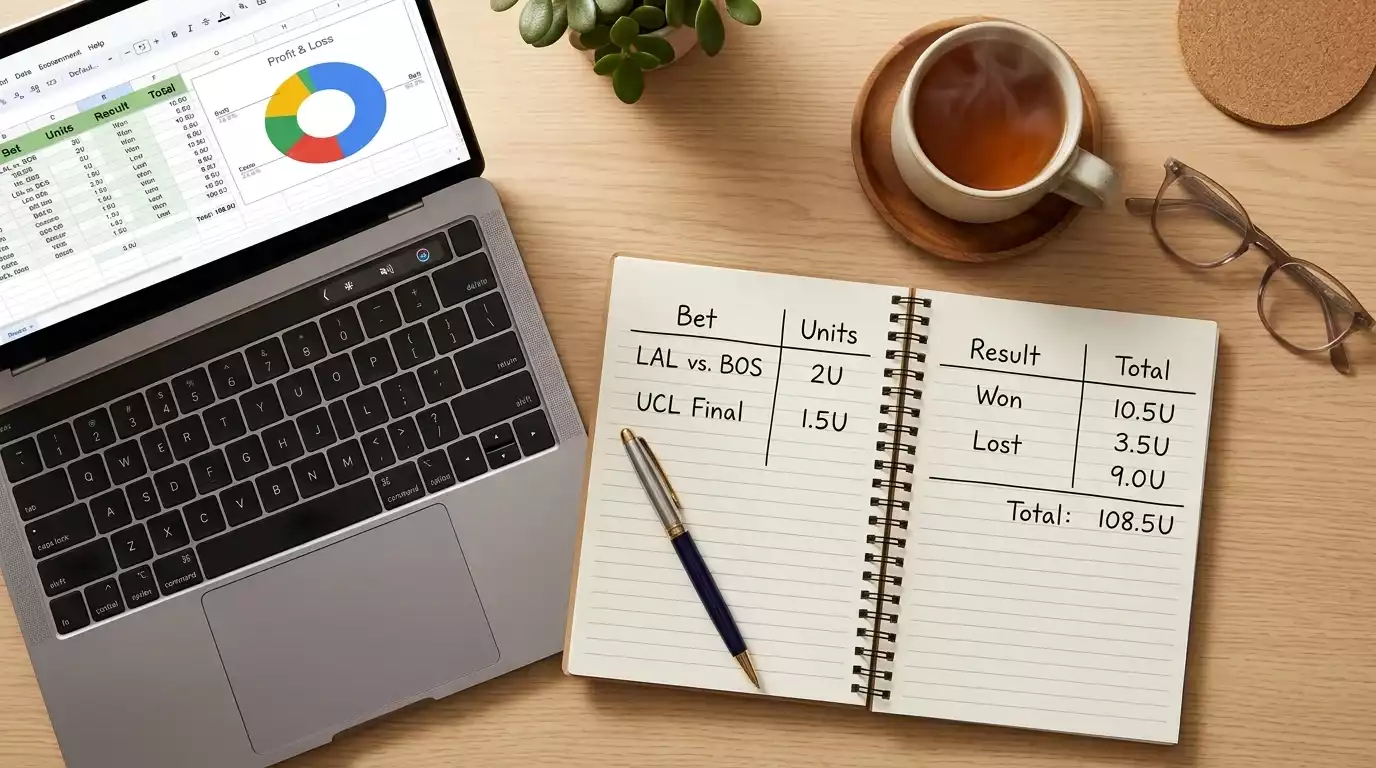
The starting point is defining your bankroll: a fixed sum of money set aside exclusively for betting, separate from rent, bills, and everything else. This is not "money you can afford to lose" — it is working capital. I recommend thinking in units rather than pounds. One unit equals a fixed percentage of your bankroll, typically between 1% and 3%. If your bankroll is £500, one unit at 2% is £10. Every bet you place is sized in units, not arbitrary amounts. This approach ensures that your stakes scale with your bankroll — they grow when you are winning and shrink when you are losing, which is the single most effective protection against going broke.
10% of British adults participate in online sports betting, and 47% engage in some form of gambling. The difference between the punters who sustain their activity and those who burn through their funds is almost always a staking plan, not predictive ability.
Unit Sizing in Practice
Bankroll: £500. Unit size: 2% = £10 per unit.
Standard bet: 1 unit (£10). High-confidence bet: 2 units (£20). Maximum bet: 3 units (£30).
After a losing streak drops your bankroll to £400, your unit recalculates: 2% of £400 = £8 per unit. Stakes shrink automatically, protecting you from further damage.
Flat staking — betting the same number of units on every wager regardless of confidence level — is the simplest model and the one I recommend for anyone who has been betting for less than two years. It removes the temptation to oversize bets on "certainties" that turn out not to be certain. Percentage-based staking, where your unit size recalculates after every bet based on your current bankroll, adds a layer of sophistication but requires discipline and accurate record-keeping. Both models work. The model that does not work is no model at all — sizing bets by gut feeling, emotional conviction, or the desire to recover losses quickly. For a deeper look at staking models, tracking systems, and the most common bankroll mistakes in MMA betting, I have written a full guide to UFC bankroll management.
The variance in UFC is real and unforgiving. A ten-fight losing streak is not evidence that your process is broken — it is a statistically normal outcome if your win rate sits around 55%. If you are betting 1-2% of your bankroll per fight, a ten-fight losing streak costs you 10-20% of your capital. Painful, but survivable. If you are betting 10% per fight, that same streak wipes out your entire bankroll. The mathematics of survival are not optional — they are the foundation on which everything else rests.
Is UFC Betting Legal in the UK? Regulation and Licensing
Every so often I get a message from a reader asking whether betting on UFC is "actually legal" in the UK, usually accompanied by a vague sense that combat sports wagering might occupy some regulatory grey area. I understand the instinct — the sport involves two people fighting in a cage, and that imagery does not immediately scream "heavily regulated consumer product." But the reality is unambiguous: betting on UFC in the United Kingdom is fully legal, provided you use a bookmaker licensed by the UK Gambling Commission.
The UKGC is one of the most stringent gambling regulators in the world, and any operator accepting bets from UK residents must hold a valid licence. The licensing framework requires operators to segregate customer funds, implement responsible gambling tools, verify age and identity, and report suspicious betting activity. Your deposits and winnings are protected by law, and the operator has a legal obligation to offer tools that help you control your spending.
UK Gambling Commission: Key Facts
Total UK gambling gross gaming yield (GGY): £16.8 billion for the year to March 2025 — a 7.3% increase year on year. The remote betting sector alone generated £2.6 billion GGY. Every licensed operator must comply with UKGC conditions covering consumer protection, anti-money laundering, and responsible gambling.
A significant regulatory change arrived in October 2025: UK bookmakers are now required to offer customers the option to set financial limits before making their first deposit. This is not a suggestion — it is a mandatory prompt. You can set a daily, weekly, or monthly deposit cap, and the bookmaker must enforce it. The measure is part of a broader push by the UKGC to shift the burden of responsible gambling from the individual to the operator, and from my perspective as someone who advocates for structured bankroll management, it is a welcome development. It gives every new bettor a built-in guardrail from day one.
In February 2026, the UK government launched a consultation on banning unlicensed operators from sponsoring British sports teams. The UKGC has made clear that it expects clubs to conduct due diligence on their gambling partners and ensure UK consumers cannot transact with unlicensed websites. This signals a tightening regulatory environment that further protects licensed-market bettors.
The number of physical betting shops across Britain has declined sharply — down to 5,825 in the year to March 2025, a 22.8% drop from pre-pandemic levels. The shift is overwhelmingly toward online betting, and UFC markets are almost exclusively an online product. You will not find UFC odds displayed in a high-street bookmaker's window, but every major licensed online sportsbook in the UK offers comprehensive MMA markets for UFC events.
One point worth making clearly: the legality of your betting depends entirely on using a licensed operator. Unlicensed offshore sites may offer UFC markets, but they operate outside UKGC jurisdiction — your deposits are not protected, dispute resolution is unavailable, and the operator has no obligation to pay out. There is no upside to using an unlicensed site when every major licensed bookmaker in the UK already offers deep UFC coverage. Stay licensed, stay protected.
Betting Integrity: How the UFC Fights Match-Fixing
In November 2025, something happened that made me rethink how seriously I take line movement alerts. A fight between Isaac Dulgarian and Yadier del Valle was flagged because of unusual betting activity — the line shifted from -250 to -130 in the hours before the bout, a move so sharp and so sudden that it triggered monitoring systems across multiple sportsbooks. The fight went ahead, but the incident was a stark reminder that combat sports, with their individual-athlete structure and relatively low fighter pay at the undercard level, are uniquely vulnerable to integrity risks.
The UFC has responded aggressively. In January 2026, a fight was pulled from the UFC 324 card after suspicious betting patterns were detected — the first time the organisation had ever taken the preventative step of cancelling a bout before it happened rather than investigating after the fact. Dana White was blunt about the decision, making clear that the organisation would rather lose a fight from a card than allow a potentially compromised bout to proceed. That level of proactive intervention is unprecedented in combat sports.
UFC fighter Vince Morales publicly revealed that he was offered ,000 to deliberately lose a fight. His decision to report the approach rather than accept it led to an investigation and underscored both the reality of match-fixing attempts and the importance of fighter cooperation in detecting them.
The monitoring infrastructure involves third-party integrity services that track betting volumes and price movements across global sportsbooks in real time. When volume on a specific outcome spikes beyond the expected profile for that fight's market, the system flags it. The sportsbook, the integrity monitor, and the UFC all receive the alert simultaneously, meaning suspicious activity is rarely invisible for long.
For you as a bettor, integrity matters because compromised fights distort the market. If you are placing a bet based on genuine analysis and the outcome has been predetermined, your edge is meaningless. Monitoring your own betting slips for anomalous line movements — sudden, sharp shifts without any obvious news catalyst — is a basic hygiene practice. If a line moves dramatically in the final hours before a fight and you cannot identify a reason (injury report, weigh-in issue, training camp news), consider passing on that bout entirely.
The broader picture is reassuring. The vast majority of UFC bouts are contested legitimately, the monitoring systems are becoming more sophisticated each year, and the organisation's willingness to pull fights from cards rather than risk their integrity sends a clear deterrent signal. But vigilance remains necessary, particularly on undercards where the betting volumes are lower and the fighters' financial incentives are different from those headlining a pay-per-view. Stay aware, watch the lines, and trust the process only when the market looks clean.
Responsible Gambling Tools for UK Bettors
I have seen smart, analytical people lose control of their betting. Not because they lacked knowledge or discipline in their fight analysis, but because they treated gambling as an emotional outlet rather than a structured activity. The line between a disciplined bettor and a problem gambler is thinner than most people realise, and the UK regulatory framework exists precisely because that risk is real and measurable.
Since October 2025, every licensed UK bookmaker must prompt you to set financial limits before your first deposit. This is not optional for the operator, and I strongly recommend using it. Set a monthly deposit limit that aligns with your bankroll plan — not your bank balance, not your salary, your bankroll. If your bankroll is £500, your monthly deposit limit should not exceed whatever you have designated as your maximum reload. This one step eliminates the most common failure mode in recreational betting: topping up the account after a bad night with money that was never earmarked for gambling.
The number of physical betting shops in Britain has fallen to 5,825 — a 22.8% decline from pre-pandemic levels — but the shift to online betting means that access is now constant. When the shop closes at 10 PM, the impulse fades. When the app is on your phone, the impulse can act at 3 AM. Use every tool available to create friction between impulse and action.
Beyond deposit limits, UK operators must offer time-out periods (short breaks, typically 24 hours to six weeks), self-exclusion (a minimum six-month block from your account), and reality checks (pop-up notifications showing session length and spending). GamStop, the national self-exclusion scheme, allows you to exclude yourself from all UKGC-licensed online gambling sites simultaneously for six months, one year, or five years.
Responsible Betting Self-Check
- Have I set a deposit limit that matches my pre-defined bankroll, not my available funds?
- Am I betting to recover previous losses rather than because I have identified genuine value?
- Have I spent more time or money on betting this week than I originally planned?
- Is my betting activity causing stress, arguments, or financial pressure in other areas of my life?
- Do I have a clear plan for what happens when my bankroll reaches zero — walk away, or reload?
If you recognise yourself in any of those questions, the tools are there and they work. There is no weakness in using them. The strongest bettors I know are the ones who built guardrails before they needed them, not after. Gambling is entertainment with a financial dimension, and the moment it stops being enjoyable or starts affecting other parts of your life, the correct response is to pause, reassess, and use the structures the UKGC has mandated for exactly this purpose.
Frequently Asked Questions
How do UFC betting odds work in fractional and decimal formats?
Fractional odds, the UK default, show profit relative to stake. A fighter at 3/1 pays £3 profit for every £1 staked. Decimal odds show the total return including stake — the same 3/1 in decimal is 4.00, meaning a £1 bet returns £4 total. Both formats express identical information. To convert fractional to decimal, divide the fraction and add one. To find implied probability from fractional odds A/B, use the formula B / (A + B).
What types of bets can I place on a UFC fight?
UK bookmakers typically offer moneyline (picking the outright winner), method of victory (KO/TKO, submission, or decision), round betting (selecting the specific round a fight ends), over/under total rounds, proposition bets (significant strikes, takedowns, knockdowns), parlays or accumulators (combining multiple selections), and futures (wagering on championship outcomes months in advance). Main card bouts tend to have the deepest range of markets, while prelim fights may be limited to moneyline and basic over/under lines.
How do I choose which fighter to bet on?
Start with the stylistic matchup: how each fighter's offensive tools interact with the opponent's defensive profile. A dominant wrestler facing a fighter with poor takedown defence is a clearer picture than two well-rounded athletes. Check recent form rather than career records, factor in gym or coaching changes, and assess whether the bookmaker's odds reflect your honest analysis. If the market prices a fighter at 65% and your research says 50%, there is no value in backing them regardless of skill level.
Is it legal to bet on UFC in the UK?
Betting on UFC is fully legal in the United Kingdom when you use a bookmaker licensed by the UK Gambling Commission. All licensed operators must segregate customer funds, verify your identity and age, offer responsible gambling tools, and comply with anti-money laundering regulations. Unlicensed offshore operators are not bound by these protections, which is why every bet should be placed through a UKGC-licensed platform.
What is the best bet type for UFC beginners?
Moneyline is the most straightforward starting point. You pick the fighter you believe will win, and if they win by any method — knockout, submission, or decision — your bet pays out. It removes the complexity of predicting how or when a fight ends and lets you focus on the fundamental question of who wins. Once you are comfortable with moneyline and have developed a research process, over/under total rounds is a natural next step because it requires understanding fight dynamics without needing to predict a specific winner.
Do I need to bet on the favourite to win at UFC betting?
No. Favourites won 72% of UFC bouts in 2024, but that does not mean backing favourites is automatically profitable. The odds on favourites are shorter, so the returns per winning bet are smaller, and a single upset can erase the profit from several correct picks. Underdogs priced at +200 and longer won 39% of their fights in 2024, well above the historical average of 28%. Profitability in UFC betting comes from finding value — situations where the odds offered are longer than the true probability of the outcome — regardless of whether the selection is a favourite or an underdog.
What is live betting in UFC and how does it work?
Live betting, also called in-play wagering, allows you to place bets while a fight is in progress. The odds update dynamically between and during rounds based on what is happening in the cage. If a fighter loses the first round but lands a significant shot that shifts momentum, their live odds may lengthen despite the improved situation, creating potential value. Live UFC betting requires a different skill set from pre-fight wagering — you need to read the fight in real time, assess momentum shifts, and act quickly before the odds adjust. Most UK-licensed sportsbooks offer live markets for main card bouts.
