
UFC Parlay Betting: How Accumulators Work and When to Use Them
 Available in US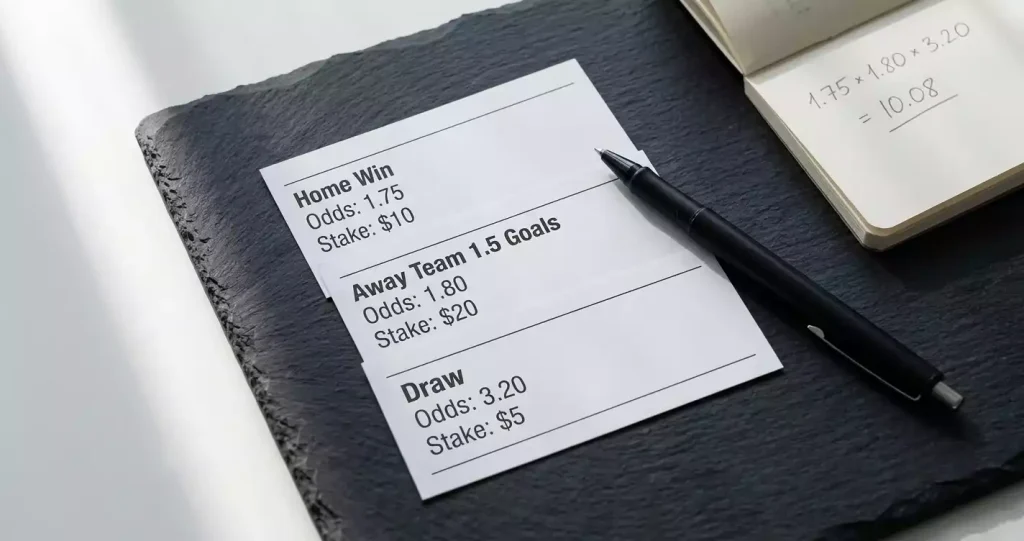
Contents
The Allure and the Risk of Combining UFC Bets
A friend once showed me a betting slip where he had combined five UFC favourites into a single accumulator, turning a £10 stake into a potential £85 payout. Four of the five fighters won. The fifth — a -400 favourite — got caught with a head kick in the second round. The entire slip was dead. That experience captures the fundamental tension of parlay betting: the payouts look spectacular, and the loss rate is brutal.
Parlays (or accumulators, as they are more commonly called in the UK) combine multiple individual bets into a single wager where every selection must win for the bet to pay out. The appeal is obvious — combined odds produce returns that dwarf what any single bet could deliver. Favourites won 72% of UFC bouts in 2026, which makes each individual leg look safe. But the maths punishes compounding risk in ways that most bettors underestimate, and understanding that maths is the difference between using parlays as a strategic tool and using them as a lottery ticket.
How UFC Parlays Are Built and Calculated
Building a UFC parlay is mechanically simple. You select two or more outcomes — typically moneyline picks across different fights on the same card — and combine them into a single bet. The combined odds are the product of each individual selection’s decimal odds.
Let me walk through a concrete example. You like three fighters on an upcoming card:
Fighter A at 1/2 (decimal 1.50)
Fighter B at 4/5 (decimal 1.80)
Fighter C at 6/4 (decimal 2.50)
The combined decimal odds are 1.50 x 1.80 x 2.50 = 6.75. A £10 stake on this three-leg parlay returns £67.50 if all three win. The same £10 split across three individual bets would return less: £5 on Fighter A at 1.50 returns £7.50, £3 on Fighter B at 1.80 returns £5.40, and £2 on Fighter C at 2.50 returns £5.00 — total returns of £17.90 across three singles, with the security that each winner pays independently of the others.
The trade-off is starkly visible: the parlay pays nearly four times as much if everything goes right, but pays nothing if a single leg fails. And in a sport where underdogs won roughly 32% of bouts across 2023-2026, a single-leg failure is not an unlikely event — it is the expected outcome on roughly one in three selections.
When a Parlay Makes Sense — and When It Does Not
After years of tracking my parlay results separately from my singles, I have identified two situations where combining UFC bets is a rational strategic choice rather than a gamble dressed in analysis clothing.
The first is when every leg offers genuine value as a single bet. If I have identified three fighters who are each underpriced by the market — meaning I believe their true win probability exceeds the implied probability of their odds — combining them into a parlay multiplies the value. The key word is “each.” If only one or two legs are value bets and the third is a pick you are adding to boost the payout, the third leg is diluting your edge, not enhancing it.
The second is when you want to bet a heavy favourite without accepting the thin returns of a singles bet. A fighter priced at 1/5 (decimal 1.20) returns just £2 profit on a £10 stake. If I believe that fighter wins 90% of the time, the moneyline is technically a slight value bet, but the return is so small that it barely justifies the stake. Including that fighter as one leg of a two- or three-leg parlay produces a meaningful combined return while still requiring conviction on every selection.
When does a parlay not make sense? Almost every other situation. If you are adding legs to a parlay for excitement rather than edge, you are paying for entertainment in the form of a lower expected return. If you are combining five or six legs because the combined payout looks life-changing, you are effectively buying a lottery ticket with worse odds than the national lottery. And if any leg in your parlay is a fight where you are genuinely unsure who wins, that uncertainty infects the entire bet.
Correlated Parlays: Combining Related Outcomes
The most sophisticated use of parlays in UFC betting involves correlated outcomes — selections where the result of one leg increases the probability of another leg hitting. Standard parlays assume each leg is independent, meaning the result of Fight A does not affect the probability of Fight B. That is generally true across different fights on a card. But within a single fight, outcomes can be heavily correlated.
For example, backing Fighter A on the moneyline and the fight going under 2.5 rounds are correlated if Fighter A’s most likely path to victory is an early knockout. If Fighter A wins, the probability that the fight ended early is higher than the base rate. Bookmakers know this, which is why same-game parlays adjust the combined odds to account for correlation — but the adjustment is not always accurate.
Another correlated combination: backing a fighter on the moneyline and the method of victory being KO/TKO. If the fighter you are backing is a power puncher and the opponent has a suspect chin, these two outcomes are strongly correlated. The parlay combining them should pay less than a standard parlay of two independent events, and it does — but occasionally the bookmaker underestimates the degree of correlation, leaving value on the table.
The trap with correlated parlays is convincing yourself that two legs are correlated when they are not. Backing Fighter A on the moneyline and “fight goes the distance” is anti-correlated if Fighter A is a finisher — their win reduces the probability of a decision, making the parlay harder to hit than the combined odds suggest. Always ask yourself: if leg one wins, does that make leg two more or less likely? If less, do not combine them.
