
UFC Betting Integrity: How Fight-Fixing Is Detected and Prevented
 Available in US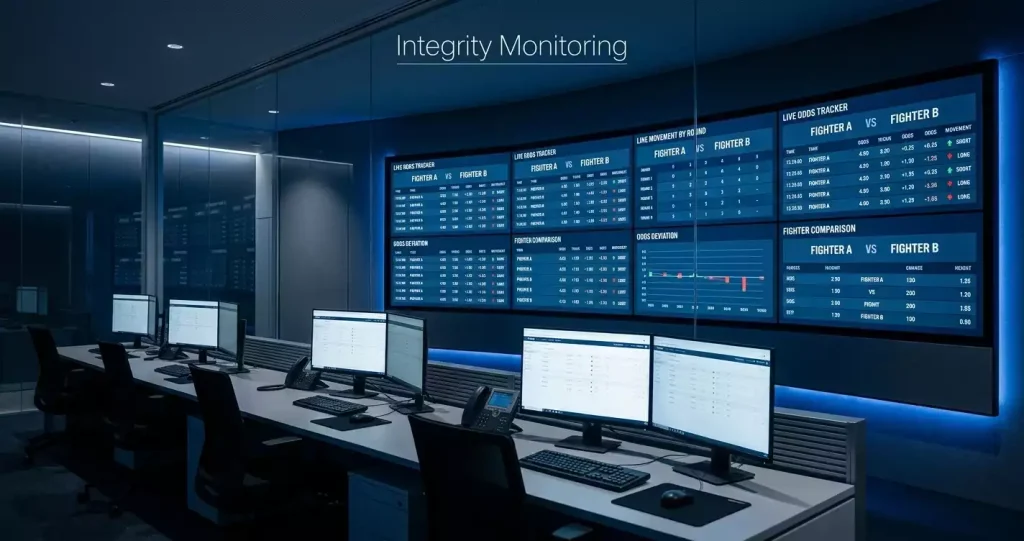
Contents
The UFC Has Pulled Fights Off Cards Over Suspicious Bets
In January 2026, something unprecedented happened: a fight was removed from a UFC card before the event because of suspicious betting activity. Not after the bout, not during an investigation months later — before the fighters even walked to the octagon. Dana White was blunt about it, saying he was done giving the benefit of the doubt after the controversies of the previous year. That decision marked a turning point in how the UFC approaches betting integrity, and it should matter to every bettor who wants to trust the markets they are wagering into.
Fight-fixing is the existential threat to combat sports betting. If the outcome of a fight has been predetermined, the odds are meaningless, your analysis is worthless, and your money is being taken by someone who already knows the result. The UFC and its integrity partners have built a monitoring system designed to catch manipulation before it corrupts the market — and the evidence from 2026-2026 suggests the system is working, even if the cases it has uncovered are uncomfortable to discuss.
IC360 and the Monitoring Pipeline
The UFC’s primary integrity partner is IC360, a sports data and integrity monitoring firm that tracks betting activity across licensed bookmakers worldwide. IC360’s system works by establishing baseline betting patterns for each fight — expected handle distribution, typical line movement speed, and normal odds ranges based on fighter profiles. When betting activity deviates significantly from these baselines, the system flags the fight for human review.
Dana White described the process in characteristically direct terms after the Dulgarian-del Valle incident in 2026: the integrity monitors reached out to the UFC, told them unusual action was being placed on a specific fight, and asked whether the promotion had any information. The UFC did not, and the investigation began. That pipeline — automated detection, human escalation, promotional cooperation — is the core of the integrity framework.
IC360 does not just monitor the UFC. The firm covers multiple sports and has access to betting data from bookmakers across dozens of jurisdictions. This cross-sport, cross-border visibility is critical because sophisticated match-fixers often place bets through accounts in different countries to avoid triggering alerts at any single operator. A suspicious pattern that looks unremarkable at one bookmaker may become obvious when aggregated across the entire market.
The UKGC also plays a role on the regulatory side. Licensed UK operators are required to report suspicious betting activity to both the Gambling Commission and the relevant sport’s governing body. This creates a parallel reporting channel that reinforces IC360’s monitoring — even if the integrity firm misses something, the bookmakers themselves may flag it independently.
Recent Cases: Dulgarian-Del Valle and UFC 324
The Isaac Dulgarian vs Yadier del Valle bout in November 2026 became the most public integrity case in recent UFC history. The betting line shifted dramatically in the hours before the fight, moving from -250 to -130 on one fighter — a swing that is almost never explained by legitimate late information like a weigh-in miss or a corner change. The line movement was so extreme that integrity monitors flagged it before the fight took place.
The fight went ahead, but the aftermath was significant. Investigations were opened, and the case put the entire MMA betting community on notice. Vince Morales, a UFC fighter, publicly stated that he had been offered $70,000 to lose a fight — a figure that illustrates the financial incentives at play. Fighters on the lower end of the UFC pay scale earn between $12,000 and $24,000 per bout, which means the bribe offer Morales described represented roughly three to six fights’ worth of income in a single payment.
Two months later, in January 2026, the UFC took the more drastic step of pulling a fight from the UFC 324 card entirely. White’s reasoning was preventative rather than punitive: remove the fight, protect the integrity of the card, and investigate later. This was the first time the UFC had proactively cancelled a bout over betting concerns, and it signalled a zero-tolerance posture that the promotion had previously only hinted at.
These cases do not mean UFC betting is unreliable. They mean the detection systems are catching anomalies — which is exactly what you want as a bettor. A market with no integrity monitoring would be far more dangerous than one where suspicious activity is identified and acted upon. The transparency of these cases, uncomfortable as they are, is actually a sign that the system is functioning.
What Bettors Can Do: Spotting Red Flags in the Market
You do not have access to IC360’s monitoring dashboard, but you can develop your own early-warning instincts by paying attention to line movement patterns that do not match the public narrative around a fight. Here are the patterns I watch for.
First, dramatic late-stage line movement with no obvious explanation. If a line moves two full points in the final 24 hours before a fight and there has been no injury report, no weigh-in issue, and no credible new information, something unusual is driving the money. That does not automatically mean fixing — it could be a single large sharp bet from a respected syndicate — but it warrants caution.
Second, movement against the public side. If social media and public betting trends heavily favour Fighter A but the line is moving towards Fighter B, sharp money or insider information may be in play. This is called reverse line movement, and while it is a normal occurrence in efficient markets, extreme cases deserve scrutiny.
Third, unusual volume on obscure markets. If a preliminary card fight that normally attracts minimal betting interest suddenly generates heavy action on method of victory or exact round props, the specificity of those bets raises questions. Someone betting large on a specific round finish in an obscure fight either has exceptional analysis or exceptional information.
My approach when I spot these red flags is simple: I do not bet on that fight. The potential edge from finding value on a compromised bout is not worth the risk of being on the wrong side of a fixed outcome. There are 43+ UFC events per year with hundreds of individual fights. Passing on one suspicious matchup costs nothing; betting into it could cost everything.
