
Responsible Gambling for UFC Bettors in the UK: Tools, Limits, and Support
 Available in US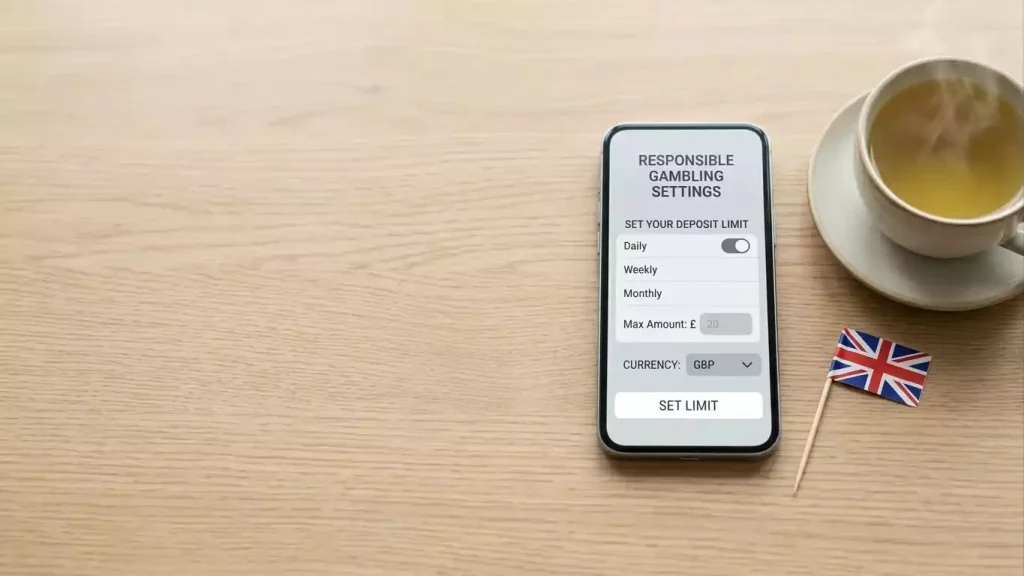
Contents
Betting on UFC Should Sharpen the Experience — Not Control It
There was a stretch about three years ago when I noticed my UFC betting had shifted from something I enjoyed into something I felt compelled to do. I was placing bets on prelim fights I had barely researched, chasing losses from the previous card, and checking my betting account more often than my bank account. None of those behaviours looked like the disciplined approach I had built over years of careful staking. That was my wake-up call, and it is the reason I take responsible gambling seriously — not as a regulatory box to tick, but as a practical framework that keeps the entire hobby sustainable.
The UK has some of the strongest responsible gambling infrastructure in the world. The tools exist. The question is whether bettors use them before they need them rather than after. This article covers what is available, how each tool works, and how to set up your own guardrails before placing your next UFC bet.
Deposit Limits and Loss Limits: Your First Line of Defence
Since October 2026, every UKGC-licensed bookmaker must offer customers the option to set financial limits before making a first deposit. This is not a suggestion buried in a settings menu — operators are now required to present the option proactively during the sign-up process. You can set daily, weekly, or monthly deposit caps, and once set, the limit cannot be increased without a cooling-off period (typically 24 to 72 hours, depending on the operator).
I set a monthly deposit limit on every account I hold, and I tie it directly to my bankroll management plan. If my total UFC betting bankroll is £500, my monthly deposit limit across all operators is capped at £100 — enough to fund a month of selective betting without ever risking exposure beyond what I can comfortably absorb. The limit is not there because I lack discipline on any given day; it is there because discipline is a depletable resource, and a hard cap works even when willpower does not.
Loss limits work similarly but cap the total amount you can lose in a given period rather than the amount you deposit. Some operators also offer session time limits, which log you out after a specified period of activity. For UFC betting specifically, I find session limits less relevant because fight cards run at set times and my betting window is naturally constrained. But for anyone who also uses the same account for casino products or live in-play markets outside UFC, session limits are worth activating.
Self-Assessment: Recognising When Betting Stops Being Fun
The line between engaged UFC bettor and problem gambler is not always obvious from the inside. I use a set of personal checkpoints that I run through at the start of every month. Am I betting on fights I have not researched? Am I increasing stakes to recover previous losses? Am I hiding the size of my bets from people close to me? Am I spending money on betting that was allocated for something else? If the answer to any of those is yes, I stop betting for a minimum of two weeks and reassess.
The number of physical betting shops in the UK has dropped to 5,825 as of March 2026 — a decline of 22.8% compared to pre-pandemic levels. Betting has moved overwhelmingly online, and that shift makes self-awareness even more critical. There is no closing time on a betting app. There is no cashier who might notice you look stressed. The responsibility sits entirely with you, and the first tool in your kit is the willingness to ask yourself uncomfortable questions on a regular schedule.
Most UK operators also provide built-in self-assessment questionnaires, often based on the Problem Gambling Severity Index. These take five minutes, they are anonymous, and they give you a structured way to evaluate your relationship with betting rather than relying on gut feeling. I recommend completing one every quarter, even if you are confident your betting is under control. The questions themselves serve as a useful reminder of what healthy betting behaviour looks like.
GamStop Self-Exclusion: How It Works Across All UK Sites
GamStop is a free self-exclusion service that allows you to block yourself from all UKGC-licensed online gambling operators in a single registration. You choose a minimum exclusion period — six months, one year, or five years — and once activated, every licensed bookmaker, casino, and bingo site in the UK is required to close your accounts and prevent you from opening new ones for the duration.
The service is not reversible during the exclusion period. You cannot call GamStop and ask them to lift the block early, and licensed operators cannot override it. That permanence is the entire point: it removes the option of a momentary lapse undoing a considered decision. After the exclusion period expires, reactivation is possible but requires an active choice — you are not automatically reinstated.
GamStop covers online operators only. If you also want to exclude from physical betting shops, you need to register separately with the operator’s in-store self-exclusion scheme or through the SENSE (Self-Enrolment National Self-Exclusion) scheme, which covers high-street bookmakers. Combining GamStop with SENSE provides comprehensive coverage across both online and offline channels.
I have never needed to use GamStop myself, but I know two fellow UFC bettors who did. Both described it as the single most effective thing they did to break a cycle of compulsive betting. The barrier to entry is low — registration takes a few minutes online — and the protection it provides is absolute for the duration of the exclusion.
Where to Get Help: UK Resources and Helplines
If you or someone you know is experiencing gambling-related harm, several UK organisations provide free, confidential support. GamCare operates a national helpline (0808 8020 133) and an online chat service, both available around the clock. The National Gambling Helpline is staffed by trained advisers who can discuss your situation and refer you to local support services.
BeGambleAware (begambleaware.org) is the main public-facing resource for gambling harm in the UK, offering self-assessment tools, information about treatment options, and links to UKGC regulatory guidance. The Gordon Moody Association provides residential treatment for people with severe gambling problems, including a dedicated programme for young adults aged 18-25 — a demographic that overlaps significantly with the UFC fan base, where 62% of interest comes from the 18-34 age group.
None of these resources require you to be in crisis before reaching out. If you are starting to feel uncomfortable about your betting, that discomfort is enough of a reason to make contact. Early intervention is consistently more effective than waiting until the problem has escalated, and every one of these services treats enquiries without judgement.
